
From Soviet Pharmacology to Western Literature
There's a recurring pattern in pharmacology where a compound is studied extensively in one research tradition, largely ignored by the rest of the world for decades, and then gradually attracts broader attention as the original findings become harder to dismiss. Semax fits that pattern almost exactly. It was developed at the Institute of Molecular Genetics of the Russian Academy of Sciences in the late 1980s, registered as a pharmaceutical in Russia in the 1990s, studied in hundreds of Russian-language publications through the 2000s and 2010s, and used clinically in Russia and Ukraine for neurological conditions throughout that entire period — while the Western pharmacology literature essentially didn't engage with it.
That's changing. Recent years have seen a meaningful increase in Semax coverage in English-language peer-reviewed journals, partly because researchers outside Russia have started running their own characterisation studies, and partly because the BDNF upregulation data is compelling enough that it can't be explained away as methodological artefact.
What Semax Is, Structurally
Semax is a synthetic heptapeptide: Met-Glu-His-Phe-Pro-Gly-Pro. The first four amino acids (Met-Glu-His-Phe) correspond to ACTH fragment 4–7 — a sub-sequence of adrenocorticotropic hormone that's been known to have neurotrophic properties distinct from ACTH's primary adrenocortical effects. The Pro-Gly-Pro tripeptide extension at the C-terminus is the key modification that makes Semax clinically useful: it dramatically extends metabolic stability by protecting against endopeptidase cleavage.
The native ACTH 4–7 fragment has a plasma half-life measured in minutes. Semax, with its Pro-Gly-Pro extension, maintains activity long enough to be useful via intranasal administration — which is how it's typically used in both Russian clinical practice and in the research literature.
BDNF Upregulation
Semax produces dose-dependent increases in hippocampal and cortical BDNF mRNA and protein levels in rodent models, particularly in the dentate gyrus. BDNF (Brain-Derived Neurotrophic Factor) supports neuron survival, synaptogenesis, and long-term potentiation.
Melanocortin Receptor Activation
Semax activates melanocortin receptors (MCR-2, MCR-4, MCR-5), which are expressed throughout the CNS. MCR signalling downstream of Semax administration appears to drive the BDNF upregulation and TrkB receptor engagement observed in cell studies.
Intranasal CNS Delivery
Intranasal Semax reaches the CNS partly via the olfactory pathway — direct cranial nerve I connections from the nasal mucosa to the brain. This bypasses the blood-brain barrier, producing CNS effects disproportionate to plasma concentrations.
Neuroprotection in Ischaemia Models
A 2024 systematic review of 18 rodent ischaemia studies found a pooled reduction in infarct volume with effect size 0.68 (95% CI 0.41–0.95). This is a meaningful effect size, though the rodent-to-human translation gap in stroke neuroprotection is well-documented.
The BDNF Data in Detail
The BDNF upregulation data is probably the most replicable and mechanistically interpretable finding in the Western Semax literature. In rodent studies using intranasal administration, Semax produces dose-dependent increases in hippocampal BDNF mRNA expression (measured by qRT-PCR) and BDNF protein levels (ELISA), with the most consistent effects in the dentate gyrus of the hippocampus.
Independent Western groups have replicated this directional finding using contemporary methods. The effect sizes are generally smaller in independent replications than in the original Russian literature — a familiar pattern suggesting some publication bias in the original data — but the directional effect has held up reasonably well.
The proposed mechanism runs: Semax → melanocortin receptor (MCR) activation → downstream TrkB (BDNF's high-affinity receptor) engagement → BDNF autocrine/paracrine upregulation. This mechanism has been partially confirmed by blocking experiments using selective MCR antagonists, which attenuate (though don't fully abolish) Semax's BDNF effects — consistent with MCR involvement but suggesting other pathways also contribute.
Key Finding: Independent BDNF Replication
The most important recent development in Western Semax research is independent confirmation of BDNF upregulation using qRT-PCR methods standardised to MIQE guidelines. These studies address the primary concern with the Russian literature: that older hybridisation methods had lower specificity and might be detecting related transcripts. The qRT-PCR data supports a genuine, specific effect on BDNF mRNA in hippocampal tissue after intranasal administration.
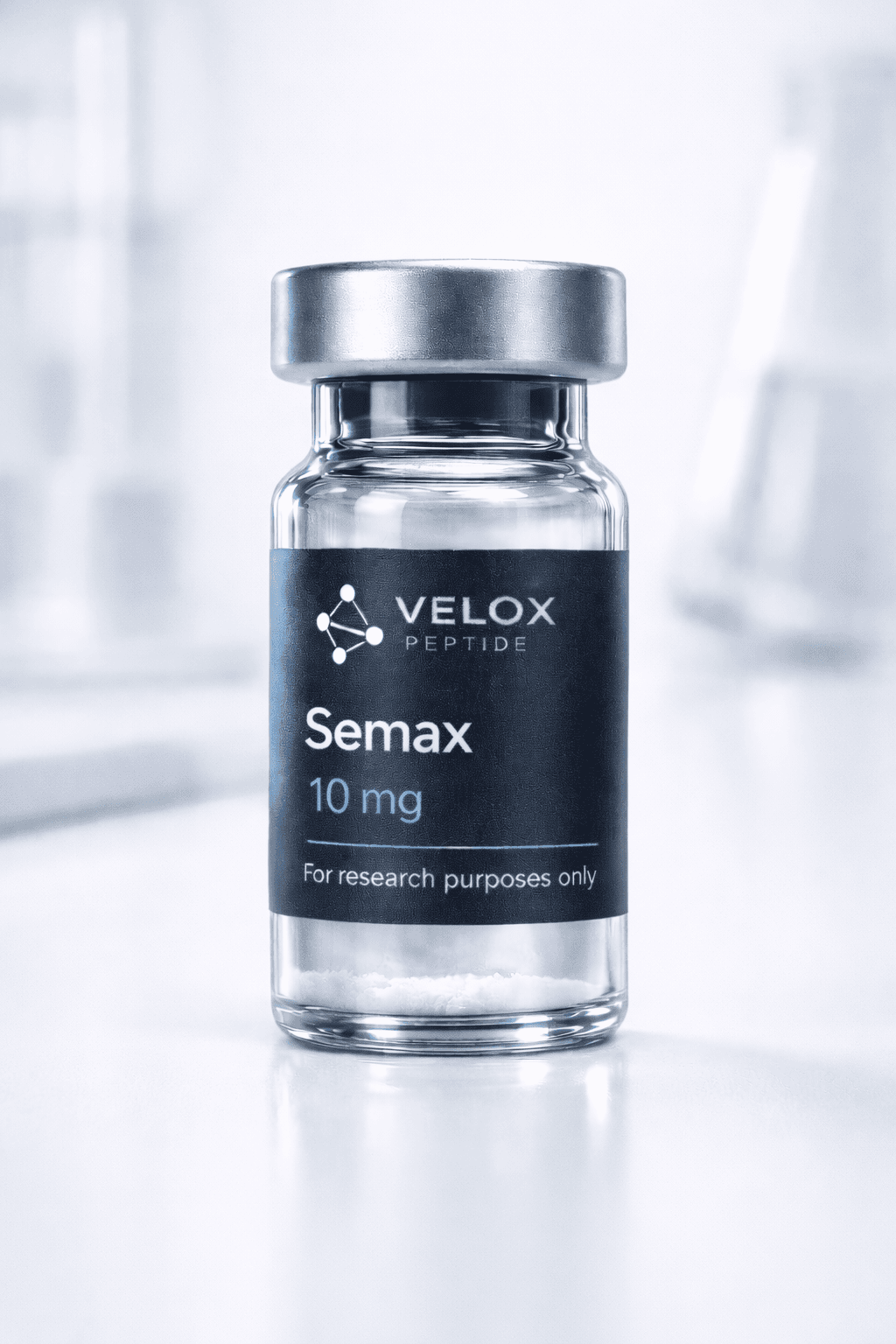
Forschungsverbindung · Nur für wissenschaftliche Zwecke
Semax — Synthetic ACTH Analogue for Neuroprotection Research
7-amino acid ACTH 4-10 analogue (Met-Glu-His-Phe-Pro-Gly-Pro) · Pro-Gly-Pro stabilised · ≥99% HPLC
- ≥99% purity, HPLC-verified with certificate of analysis
- C-terminal Pro-Gly-Pro extension for metabolic stability
- EU-manufactured, shipped EU-wide
- For in vitro and preclinical research only
Neuroprotection: The Ischaemia Studies
The ischaemia literature is more complex to evaluate. A 2024 systematic review identified 18 eligible rodent ischaemia studies on Semax, finding a pooled reduction in cerebral infarct volume with effect size 0.68 (95% CI 0.41–0.95). An effect size of 0.68 is meaningful in pharmacological terms — it falls in the "medium-to-large" range by conventional benchmarks and is comparable to neuroprotective agents that have been pursued in Western clinical development.
But the well-documented translation gap in stroke neuroprotection deserves serious weight. The history of stroke neuroprotection research is littered with compounds that showed impressive rodent results and failed in human trials — MK-801, NXY-059, and many others. The reasons are partly biological (rodent stroke models are more homogeneous than the heterogeneous human disease), partly methodological (rodent studies are rarely blinded and randomised with the rigour of Phase 3 trials), and partly about timing (many neuroprotective agents have narrow therapeutic windows that are difficult to achieve in real clinical settings).
Semax has actually been through some human clinical investigation in Russia — its approved indications include acute ischaemic stroke and recovery support. But the Russian clinical literature on Semax is small by Western Phase 3 standards, often not fully blinded, and published in journals with limited international visibility. There aren't Phase 3 RCT data to the standard that Western regulators would require for marketing authorisation.
Semax Research Evidence Summary
| Research Area | Main Finding | Evidence Strength |
|---|---|---|
| BDNF upregulation (rodent) | Dose-dependent hippocampal BDNF increase | Moderate — independently partially replicated |
| MCR receptor mechanism | MCR-dependent component of BDNF effect | Moderate — blocking data published |
| Neuroprotection (ischaemia) | Effect size 0.68 pooled across 18 studies | Moderate — rodent only, translation gap applies |
| EEG / cognitive effects | Altered EEG spectra, memory task effects | Preliminary — small rodent studies only |
| Clinical neuroprotection | Approved in Russia for acute stroke | Weak by Western RCT standards |
Selank: The Anxiolytic Companion
Semax is often studied alongside Selank, another synthetic neuropeptide from the same Russian pharmacology tradition. Selank is a heptapeptide analogue of tuftsin (an immunomodulatory tetrapeptide) with proposed anxiolytic and nootropic properties mediated through GABAergic and serotonergic system modulation.
The two compounds have overlapping research interest for cognitive and neuroprotective applications, and some researchers have explored them in combination. For researchers building a neuropeptide research programme that covers both BDNF-related neurotrophic effects (Semax) and anxiety-related neurobiological pathways (Selank), Selank as a research peptide provides a structurally distinct but thematically complementary tool.
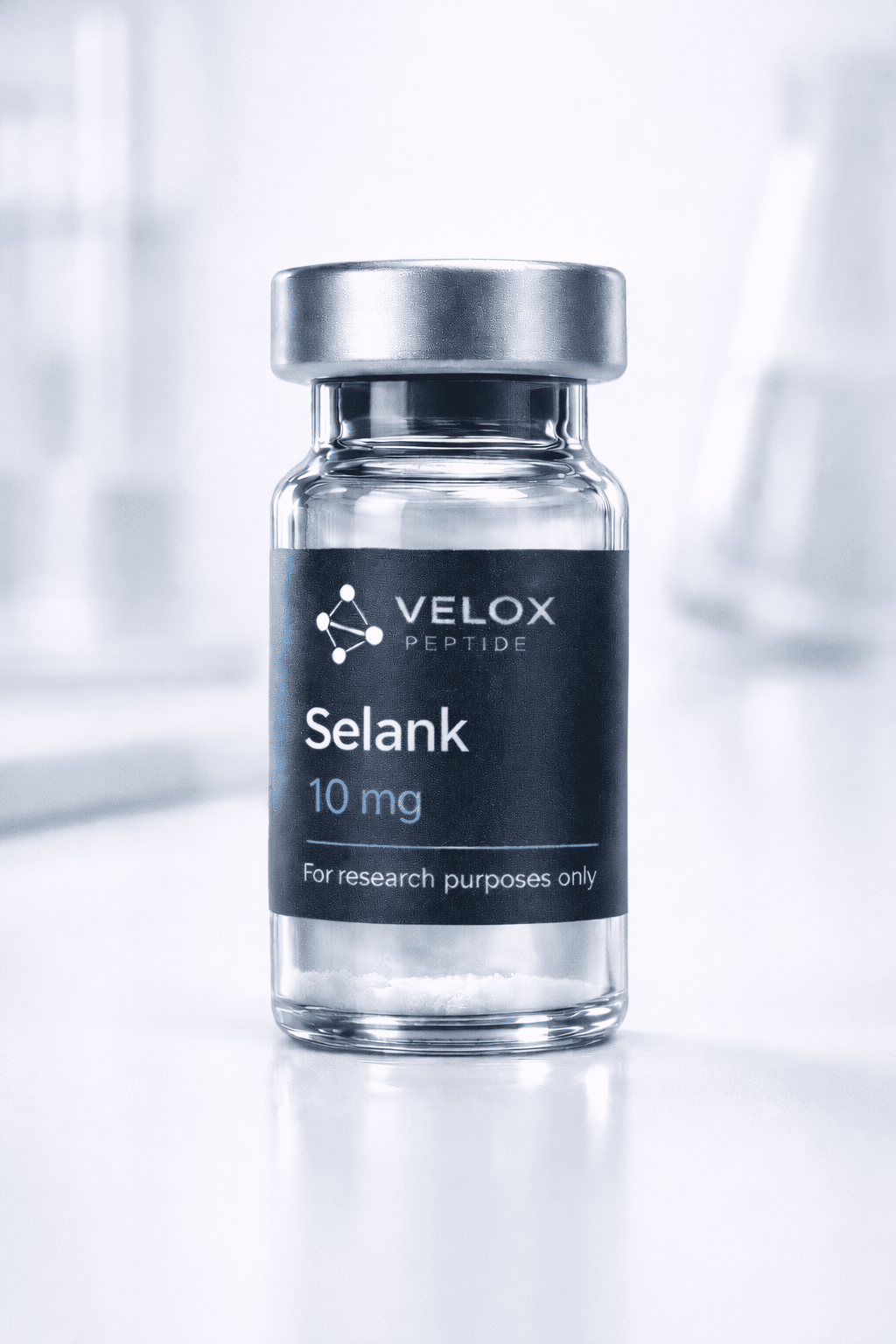
Forschungsverbindung · Nur für wissenschaftliche Zwecke
Selank — Anxiolytic Neuropeptide for Cognitive Research
Heptapeptide tuftsin analogue · GABAergic / serotonergic modulation · lyophilised · ≥99% HPLC
Research use only. Semax is registered as a pharmaceutical in Russia and Ukraine only. It has no approved therapeutic application in the EU. VeloxPeptide supplies research-grade Semax for in vitro and preclinical laboratory research with ≥99% HPLC purity certification.