
BPC-157's Peculiar Position in Peptide Research
BPC-157 occupies a peculiar position in peptide research. On one hand, it has an unusually large preclinical literature for a compound that has never completed a proper Phase 2 clinical trial. On the other, that literature has come almost entirely from a single research group — the Sikiric laboratory at the University of Zagreb — which makes it genuinely difficult to know how much confidence to place in any individual finding.
A new rodent study examining BPC-157's effects on gut-brain signalling adds more data to this ongoing puzzle, and it's worth looking at both what the study shows and what its limitations tell us about where this research needs to go.
Some Context on the Compound Itself
BPC-157 (Body Protection Compound-157) is a synthetic 15-amino acid pentadecapeptide derived from a partial sequence of a protein found in human gastric juice. Its sequence is Gly-Glu-Pro-Pro-Pro-Gly-Lys-Pro-Ala-Asp-Asp-Ala-Gly-Leu-Val. What makes it unusual — and useful for gastrointestinal research — is that it's remarkably stable in acidic conditions that would rapidly degrade most other peptides.
That stability is thought to be relevant to its gastrointestinal research profile. A peptide derived from gastric juice that survives gastric acid is at least plausibly positioned to interact with enteric tissue in ways that most research peptides can't. Whether that translates to meaningful in vivo effects in humans is a separate question — and one that the absence of clinical trials means we can't currently answer.
FAK Signalling Pathway
BPC-157 activates Focal Adhesion Kinase (FAK), a central regulator of cell migration and wound healing. This drives fibroblast infiltration into damaged tissue and accelerates collagen matrix formation.
VEGF Upregulation
Vascular Endothelial Growth Factor expression is increased, supporting angiogenesis in damaged tissue. New blood vessel formation is essential for sustained tissue repair and nutrient delivery.
NO System Modulation
BPC-157 interacts with the nitric oxide synthase (NOS) complex, which influences vasodilation, local inflammation, and gastric mucosal blood flow — relevant to its gastrointestinal research applications.
Vagal Afferent Signalling
The new gut-brain study shows differential c-Fos activation in the nucleus tractus solitarius — the brainstem hub where gut-to-brain vagal signals terminate — suggesting systemic BPC-157 reaches or influences central vagal processing.
What the New Gut-Brain Study Found
The study, published in Peptides, examined BPC-157's effects on central nervous system markers after peripheral administration in rats. The specific readout was c-Fos expression — a widely used immediate early gene marker that indicates recent neuronal activity — across regions of the brainstem involved in gut-to-brain signalling.
What they found was differential c-Fos expression patterns in the nucleus tractus solitarius (NTS), the brainstem region where vagal afferents from the gut terminate. BPC-157-treated animals showed altered NTS activation patterns compared to controls, suggesting that peripheral administration of the peptide produces measurable changes in gut-to-brain signalling.
That's an interesting result. It doesn't confirm that BPC-157 crosses the blood-brain barrier in meaningful quantities — in fact, the NTS interpretation is specifically about signalling that travels from the gut to the brainstem via the vagal nerve, not about the peptide itself reaching central structures. But it does raise the possibility that systemic BPC-157 can influence central nervous system activity indirectly, through peripheral gut receptor engagement.
Key Study Finding: NTS c-Fos Activation
Nucleus tractus solitarius (NTS) c-Fos expression changes after peripheral BPC-157 administration suggest the peptide influences gut-to-brain afferent signalling. This is consistent with vagal pathway engagement — BPC-157 interacting with enteroceptors in the GI tract, triggering signals that travel up the vagus nerve to the brainstem. Whether this is the primary mechanism of any systemic effects, or a secondary observation, requires studies including vagotomy models to resolve.
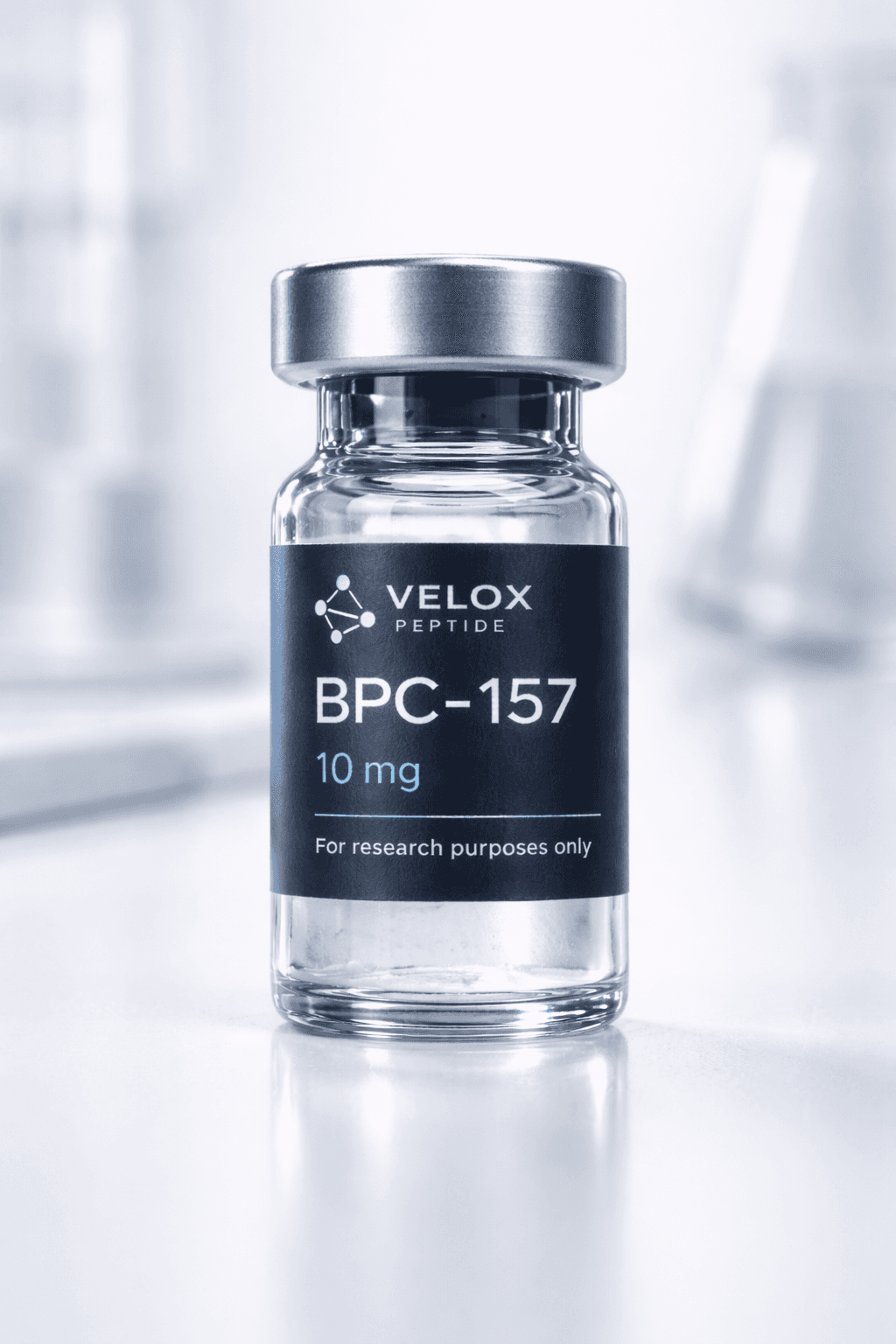
Compuesto de investigación · Solo para uso científico
BPC-157 (Body Protection Compound) — Research Grade
15-amino acid pentadecapeptide · Sequence: Gly-Glu-Pro-Pro-Pro-Gly-Lys-Pro-Ala-Asp-Asp-Ala-Gly-Leu-Val · ≥99% HPLC
- ≥99% purity, HPLC-verified with mass spectrometry confirmation
- Acid-stable synthetic pentadecapeptide
- Certificate of analysis (CoA) included
- For in vitro and preclinical research only
Limitations and What We Still Don't Know
The honest accounting of this study's limitations is worth spelling out, because it's illustrative of the broader issues with BPC-157 research. The study is a rodent model with a relatively small sample size. It comes from a research group with close ties to the established BPC-157 literature. The c-Fos marker tells you something happened neurologically, but not exactly what, through which pathway, at what dose-response relationship, or whether it matters functionally.
The missing studies in BPC-157 research are: a vagotomy experiment (to confirm the vagal pathway hypothesis), a pharmacokinetic study in larger animals confirming where administered BPC-157 actually goes, dose-response characterisation of the NTS activation pattern, and — most importantly — any human data at all. BPC-157 has been studied for over 30 years in rodents and has never been through a Phase 1 pharmacokinetics study in humans. That gap is significant and difficult to explain other than by the absence of commercial incentive to fund trials for a non-patentable compound.
BPC-157 Evidence by Tissue Type
| Tissue / System | Observed Effect (Rodent) | Evidence Strength |
|---|---|---|
| Tendon & Ligament | Accelerated collagen maturation, tensile strength increase | Strong (>10 studies) |
| Gastric Mucosa | Ulcer healing, mucosal protection from NSAIDs/alcohol | Strong (>15 studies) |
| Bone | Improved trabecular structure, earlier callus formation | Moderate (4–6 studies) |
| Skeletal Muscle | Reduced necrosis after crush injury | Moderate (5 studies) |
| Gut-Brain Axis | Altered NTS c-Fos expression, vagal pathway signals | Preliminary (1–2 studies) |
What Rigorous Follow-Up Research Would Look Like
Here's what a well-designed follow-up programme for the gut-brain finding would include. First, a vagotomy experiment — if the vagus nerve is the pathway, cutting it should abolish the NTS c-Fos changes. That would confirm the proposed mechanism rather than just correlating peripheral administration with central effects.
Second, pharmacokinetic characterisation of where BPC-157 actually goes after peripheral administration. Do measurable plasma concentrations reach the enteric mucosa? Does any of it cross into the CNS? Radiotracer or mass spectrometry-based PK studies in rodents would answer this. Third, functional behavioural endpoints — if gut-brain signalling is genuinely altered, does that translate to measurable changes in feeding behaviour, visceral sensitivity, or anxiety-related parameters?
The gut-brain angle is scientifically interesting precisely because BPC-157 is orally stable. A peptide that survives gastric acid and may influence vagal signalling from the GI tract has a potentially plausible oral administration story that most research peptides simply don't. But "plausible story" and "demonstrated mechanism" are different things, and the current literature hasn't bridged that gap.
For researchers interested in combined tissue healing and gut-protective research programmes, the Wolverine Stack (BPC-157 + TB-500 combination) is also available for research, combining BPC-157's gastrointestinal stability with TB-500's actin-binding wound healing properties.
Research Limitation: Single-Group Provenance
The majority of BPC-157's preclinical evidence base — including this gut-brain study — originates from the Sikiric laboratory at the University of Zagreb. This is not inherently a problem: good science can come from small groups, and many important findings in peptide biology have been validated after initial publication by a single team. But it does mean the effect sizes and directional findings should be treated as preliminary until independently replicated by groups without prior investment in the compound's research narrative.
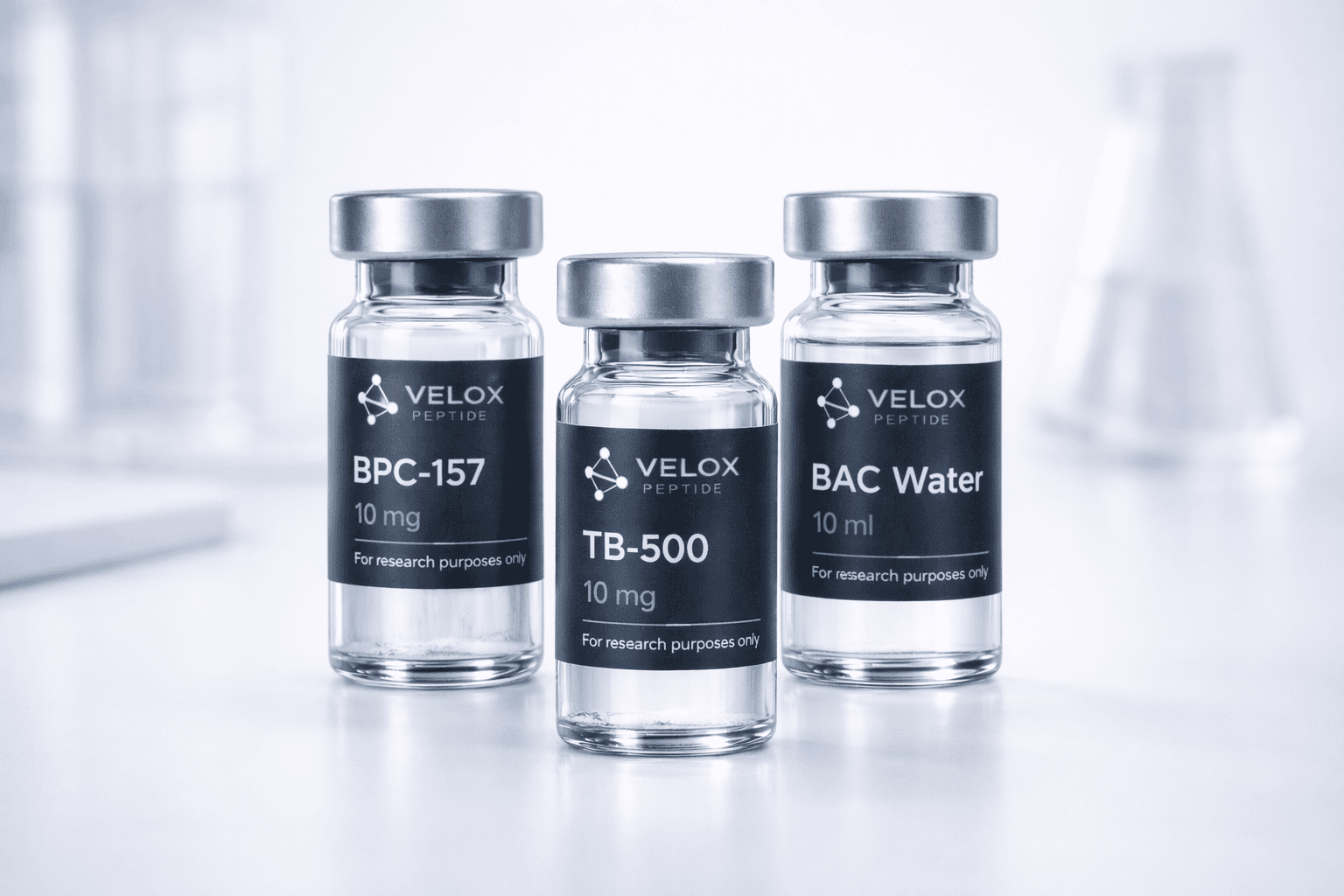
Compuesto de investigación · Solo para uso científico
Wolverine Stack — BPC-157 + TB-500 Research Combination
BPC-157 pentadecapeptide + TB-500 (Thymosin β4 analogue) · Combined lyophilised formulation · ≥99% HPLC
Research use only. BPC-157 is not approved for human therapeutic use. VeloxPeptide supplies research-grade peptides for in vitro and preclinical laboratory research exclusively. All compounds are sold with certificates of analysis confirming ≥99% HPLC purity.