
A Field That Moved Faster Than Expected
The GLP-1 field has moved faster in the past five years than almost anyone in metabolic medicine expected. When semaglutide first showed 15% body weight reduction in STEP-1, that felt like a ceiling. It wasn't even close. Tirzepatide then pushed past 20% in SURMOUNT-1. Retatrutide followed with 24% in Phase 2. The trajectory has been almost vertical, and the logical question that now occupies the research community is where exactly it stops — or whether the ceiling was a methodological artefact all along, a consequence of using compounds that weren't targeting the full receptor landscape available to them.
Mapping the current frontier requires understanding not just which compounds are in development, but what different receptor combinations actually do mechanistically — and why adding each new receptor appears to produce additive rather than redundant effects.
The Receptor Landscape: From Mono- to Triple Agonism
The GLP-1 receptor was the first target because GLP-1 itself is an endogenous incretin hormone with an established pharmacology going back decades. Semaglutide is essentially an optimised, long-acting version of the native GLP-1 molecule — same mechanism, extended half-life through fatty acid conjugation and amino acid substitutions that prevent DPP-4 degradation.
GLP-1 Monoagonism
~15–17% (Phase 3)Semaglutide, liraglutide
Appetite suppression via hypothalamic circuits, delayed gastric emptying, glucose-dependent insulin secretion, cardioprotective effects via direct cardiac receptor expression.
GLP-1/GIP Dual Agonism
~22.5% (Phase 3)Tirzepatide
Adds GIP receptor agonism: improves adipose insulin sensitivity, may counteract GLP-1 nausea, potentiates insulin secretion additively. Distinct downstream signalling cascades provide additive effects.
GLP-1/GIP/Glucagon Triple
~24.2% (Phase 2)Retatrutide
Adds glucagon receptor agonism: promotes hepatic fatty acid oxidation, adipose tissue browning (thermogenesis), increases energy expenditure. GLP-1 counteracts glucagon's hyperglycaemic effect.
Next Frontier
TBD — Phase 2/3GLP-1/PYY, GLP-1/GIP/GLP-2
Research is exploring peptide YY (PYY) co-agonism for additional appetite effects, GLP-2 addition for intestinal integrity, and amylin (pramlintide analogue) combination (CagriSema). The ceiling is not yet in view.
Why Adding Each Receptor Matters
The non-obvious finding in the dual and triple agonism data is that the effects of each additional receptor are roughly additive rather than redundant. You might expect that there's only so much appetite you can suppress, so adding more receptors would produce diminishing returns past a certain point. The clinical data suggests that isn't quite right — at least not yet.
The reason may be that the different receptor targets are addressing different aspects of energy balance rather than the same mechanism through different pathways. GLP-1 agonism primarily reduces caloric intake. GIP agonism improves how efficiently the body handles the calories that are consumed (insulin sensitivity, adipose lipid metabolism). Glucagon receptor agonism increases how many calories the body burns at baseline (thermogenesis). These are genuinely distinct physiological processes — which is why combining them produces compound effects.
Metabolic Mechanism Comparison: Major GLP-1 Class Compounds
| Mechanism | Semaglutide | Tirzepatide | Retatrutide |
|---|---|---|---|
| Appetite suppression | ✓ | ✓ | ✓ |
| Delayed gastric emptying | ✓ | ✓ | ✓ |
| Adipose insulin sensitisation | — | ✓ | ✓ |
| Hepatic fat oxidation | — | — | ✓ |
| Thermogenesis / brown fat | — | — | ✓ |
| Cardioprotection (direct) | ✓ | ✓ | Unknown |
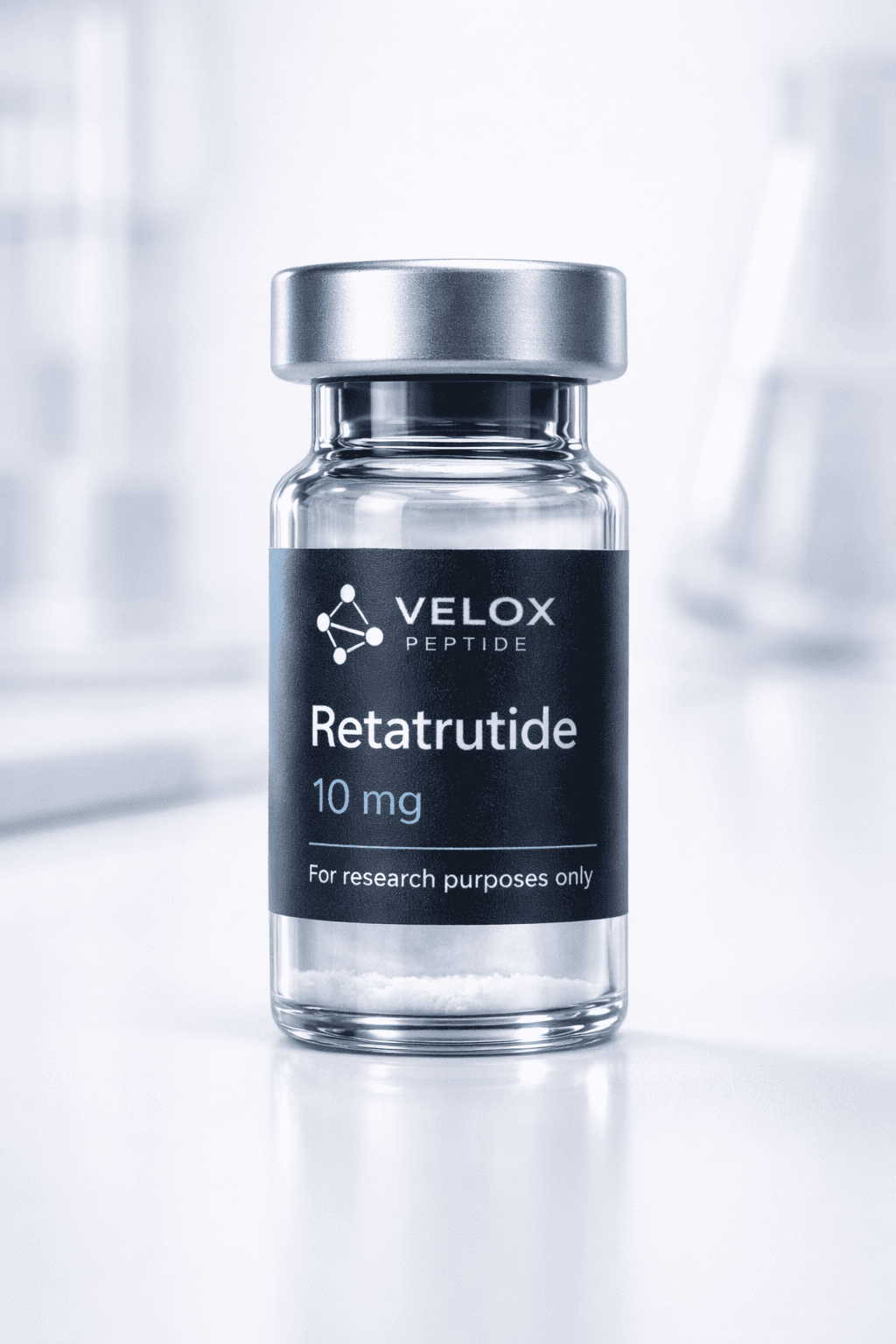
Composé de recherche · Usage scientifique uniquement
Retatrutide — Triple GLP-1/GIP/Glucagon Agonist Research Peptide
Synthetic polypeptide · Triple receptor agonist · lyophilised · ≥99% HPLC purity
- ≥99% purity, HPLC-verified with certificate of analysis
- Lyophilised for long-term storage stability
- EU-manufactured and shipped EU-wide
- For in vitro and preclinical research only
Biased Agonism and the Next Research Questions
Beyond adding receptor targets, the field is also exploring biased agonism — the idea that different ligands at the same receptor can selectively activate distinct downstream signalling pathways. At the GLP-1 receptor, the two main pathways are cAMP/PKA signalling (driving insulin secretion and the metabolic effects) and β-arrestin recruitment (driving receptor internalisation and potentially distinct cardioprotective effects).
Compounds with different structural features can preferentially engage one pathway over the other — this is called "functional selectivity" or biased agonism. Research peptides allow systematic study of which structural modifications drive cAMP versus β-arrestin bias, with potential implications for designing compounds with optimised therapeutic indices. This is an active area of basic research that goes well beyond the current clinical development focus on weight loss.
Small molecule GLP-1 agonists are also a significant frontier. Oral peptide bioavailability remains challenging — semaglutide oral tablets use an absorption enhancer (SNAC) and have ~1% bioavailability. Compounds like orforglipron and danuglipron achieve GLP-1 agonism via non-peptide molecular scaffolds with conventional oral bioavailability, potentially removing the need for injections. These are entering Phase 3 now, and their data will be important for understanding how much of the GLP-1 class's effect is receptor-driven versus route-of-administration-specific.
Research Insight: The Biased Agonism Question
β-arrestin vs cAMP biased agonism at the GLP-1 receptor remains mechanistically important and commercially interesting. Cardioprotective effects of GLP-1 agonists — demonstrated in LEADER, SUSTAIN-6, and SELECT cardiovascular outcomes trials — may be partly driven by direct cardiac GLP-1 receptor activation and β-arrestin-mediated cardioprotective signalling pathways. Whether biased agonists that preferentially recruit β-arrestin over cAMP could maintain or even enhance cardiovascular protection while reducing GI side effects is an active research hypothesis.
The GHRH Axis: Adjacent Metabolic Research
The GLP-1 class commands most of the metabolic research attention right now, but adjacent hormone axes are also relevant to researchers studying visceral fat, insulin resistance, and metabolic syndrome. Tesamorelin — the FDA-approved GHRH analogue — demonstrated specific visceral adipose tissue reduction in HIV-associated lipodystrophy through a growth hormone-mediated mechanism. This positions it as a complementary tool for researchers studying visceral fat mobilisation through a GH/IGF-1 pathway distinct from the GLP-1/GIP/glucagon system.
Understanding the intersection of the GH axis and GLP-1 axis in metabolic regulation is an open research question — particularly in the context of age-related visceral adiposity, where both GH secretion and incretin sensitivity decline simultaneously.
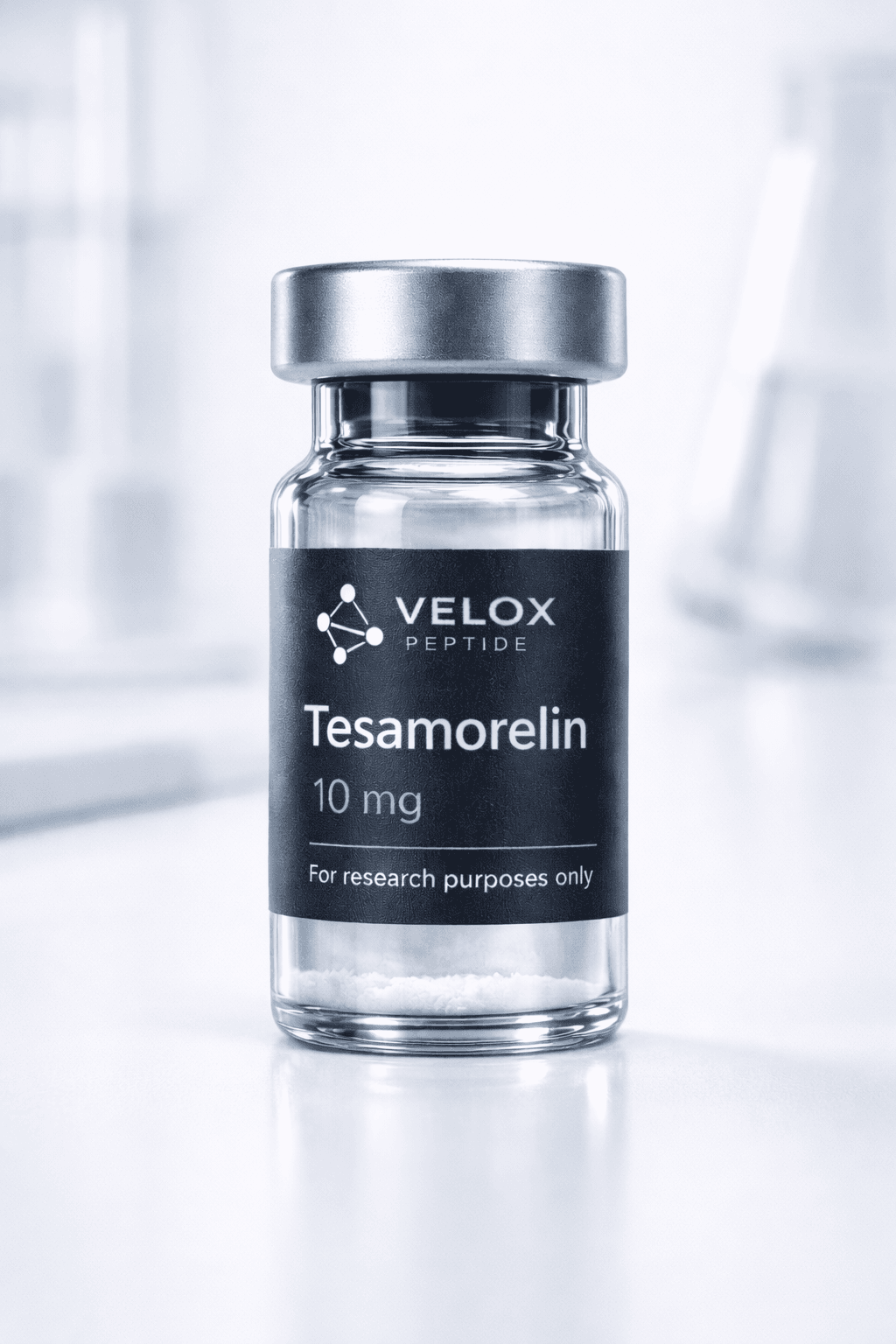
Composé de recherche · Usage scientifique uniquement
Tesamorelin — GHRH Analogue, Visceral Fat Research
44-amino acid GHRH analogue · Modified N-terminus · lyophilised · ≥99% HPLC
Research use only. All compounds discussed are sold for in vitro and preclinical laboratory research. None are approved for human therapeutic use outside of specific registered indications. VeloxPeptide compounds carry ≥99% HPLC purity certification.