
What the TRIUMPH Programme Is Actually Testing
The peptide research world doesn't get many moments like the 2023 NEJM publication on retatrutide. Twenty-four percent body weight reduction at 48 weeks. In a Phase 2 trial. That number landed hard, because even the most optimistic people in the GLP-1 space weren't quite expecting the glucagon arm of the equation to push results that far beyond what tirzepatide had already achieved. Now the Phase 3 TRIUMPH programme is running, and the research community is watching closely.
Retatrutide isn't one trial — it's a programme. TRIUMPH covers obesity without diabetes (TRIUMPH-1), type 2 diabetes with obesity (TRIUMPH-2), MASH/metabolic liver disease (TRIUMPH-3), and a cardiovascular outcomes study (TRIUMPH-CVOT). Each arm has distinct endpoints and patient populations. The headline question — how much weight do patients lose? — is most directly addressed in TRIUMPH-1, where the primary endpoint is percentage body weight reduction at 72 weeks.
The interim data is promising but requires interpretation. Researchers familiar with the programme note that retatrutide's Phase 2 results set extremely high expectations. The question isn't whether TRIUMPH will show significant weight loss — it will. The question is whether it maintains superiority over tirzepatide at equivalent timepoints, and whether the tolerability profile holds at scale.
The Three-Receptor Mechanism Explained
The three targets aren't redundant — they serve different mechanistic functions believed to compound each other.
GLP-1 Receptor
Reduces appetite via hypothalamic circuits, slows gastric emptying, drives glucose-dependent insulin secretion. The primary mechanism of semaglutide. Responsible for the nausea characteristic of the drug class.
GIP Receptor
Tirzepatide's added mechanism. Improves insulin sensitivity in adipose tissue and counterintuitively appears to reduce GLP-1-associated nausea — adding GIP seems to make the first receptor's side effects more tolerable.
Glucagon Receptor
Retatrutide's distinguishing third target. Glucagon normally raises blood glucose and promotes fat burning. The GLP-1 component counteracts the glucose-raising effect, leaving the thermogenic energy expenditure component intact.
Triple Synergy
Triple agonism attacks weight from two distinct angles simultaneously: reduced caloric intake (GLP-1/GIP) and increased energy expenditure via thermogenesis (glucagon). This dual-axis mechanism explains why Phase 2 numbers exceeded tirzepatide's best Phase 3 results.
Phase 2 Numbers and Their Caveats
The Phase 2 data, published in the New England Journal of Medicine (2023), showed 24.2% mean body weight reduction at 48 weeks for the 12 mg weekly dose group. Tirzepatide's SURMOUNT-1 showed 22.5% at 72 weeks. Retatrutide's Phase 2 result numerically exceeds that — though the trials aren't directly comparable and different patient populations make cross-trial comparison imprecise.
Important caveats exist. Phase 2 trials are dose-finding studies in relatively controlled populations. They tend to show effect sizes that modestly exceed what Phase 3 delivers at scale. The 24.2% figure is the highest dose group in a selected patient sample. Phase 3's broader population may deliver somewhat lower averages. The lower doses also showed: 4 mg → 8.7%, 8 mg → 17.5%.
GLP-1 Class Comparison: Weight Loss Data
| Compound | Receptor Targets | Best Weight Loss | Trial Phase |
|---|---|---|---|
| Semaglutide 2.4 mg | GLP-1 | ~17% | Phase 3 (72 wk) |
| Tirzepatide 15 mg | GLP-1 + GIP | 22.5% | Phase 3 (72 wk) |
| Retatrutide 12 mg | GLP-1 + GIP + Glucagon | 24.2% | Phase 2 (48 wk) |
| CagriSema | GLP-1 + Amylin analogue | ~25%* | Phase 3 (interim) |
*Not directly comparable across trials due to differing populations and durations.
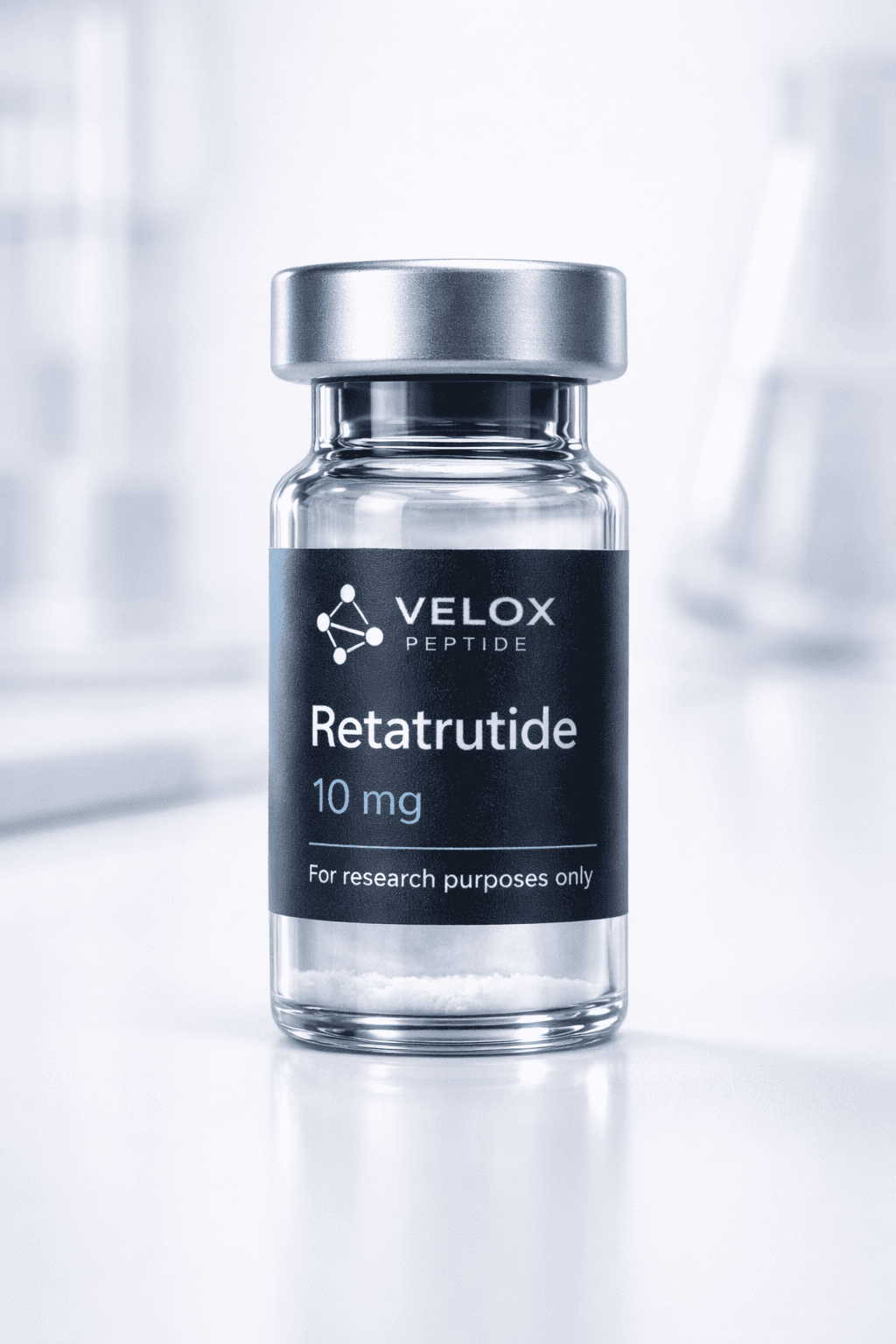
Composé de recherche · Usage scientifique uniquement
Retatrutide (LY3437943) — Triple GLP-1/GIP/Glucagon Agonist
Synthetic polypeptide · Triple receptor agonist · lyophilised · ≥99% HPLC purity
- ≥99% purity, HPLC-verified with certificate of analysis
- Lyophilised powder for long-term stability
- EU-manufactured, shipped EU-wide
- For in vitro and preclinical research only
The Cardiovascular and Liver Fat Questions
TRIUMPH-CVOT is probably the most consequential arm for long-term prospects, even though it won't report for years. Semaglutide's FLOW trial showed kidney benefits beyond what cardiometabolic risk reduction alone could explain. If retatrutide shows cardiovascular benefits that extend beyond weight loss — given the glucagon component's hepatic effects — it could carve out a distinct indication for high-cardiometabolic-risk patients.
The glucagon receptor's role in liver fat reduction is particularly relevant for TRIUMPH-3 (the MASH arm). Glucagon receptor agonism reduces hepatic steatosis through fatty acid oxidation promotion. A triple agonist that simultaneously addresses weight, glycaemia, and liver fat would have a meaningfully differentiated clinical profile from both semaglutide and tirzepatide.
Key Research Implication: Hepatic Fat Mobilisation
Glucagon receptor agonism promotes hepatic fatty acid oxidation through PKA-mediated activation of lipase and CPT1 (carnitine palmitoyltransferase 1), which transfers fatty acids into mitochondria for beta-oxidation. At the triple agonist level, this creates a compound that simultaneously reduces caloric intake, improves insulin sensitivity, and directly drives fat burning in the liver — a combination neither single nor dual agonists can replicate. This makes retatrutide particularly interesting for researchers studying NAFLD/MASH pathophysiology.
What Researchers Are Watching For
Beyond the headline weight loss number, the research community has identified several secondary endpoints that will determine how significant the TRIUMPH data really is. First: tolerability at scale. The main dose-limiting adverse events in Phase 2 were gastrointestinal — nausea, vomiting — consistent with the drug class. Whether the glucagon component changes the side effect character in ways not apparent in Phase 2's smaller population is unknown.
Second: body composition data. Weight loss on GLP-1 class drugs includes a meaningful proportion of lean muscle mass — roughly 25–40% of total mass lost, depending on population. Whether retatrutide's glucagon component changes that ratio (since glucagon promotes fat mobilisation specifically) is a genuinely interesting mechanistic question. The TRIUMPH programme's DXA sub-studies will provide definitive data on whether triple agonism shifts the fat-to-lean ratio of weight lost — with significant implications for sarcopenia and functional capacity.
Lean Mass Preservation: An Open Research Question
One of the more clinically significant questions in GLP-1 pharmacology is lean mass loss during treatment. Glucagon receptor agonism — via its targeted fat mobilisation effects in hepatic and adipose tissue — may preserve lean mass better than GLP-1 monoagonism alone. If TRIUMPH's DXA data shows a better fat-to-lean ratio than tirzepatide's comparable data, that would represent a meaningful clinical differentiation beyond the simple weight loss number.
Research Applications of Retatrutide
For researchers studying metabolic peptide pharmacology, retatrutide as a research-grade peptide offers something neither semaglutide nor tirzepatide can: simultaneous activation of three structurally distinct receptor classes. In vitro studies allow comparative investigation of how each receptor contributes to downstream signalling — cAMP accumulation, β-arrestin recruitment, receptor internalisation kinetics — when all three are activated together.
For researchers also exploring growth hormone axis components of metabolic regulation, tesamorelin — a GHRH analogue — has overlapping research interest given its clinically demonstrated effects on visceral adipose tissue and is often studied alongside GLP-1 class compounds in metabolic research programmes.
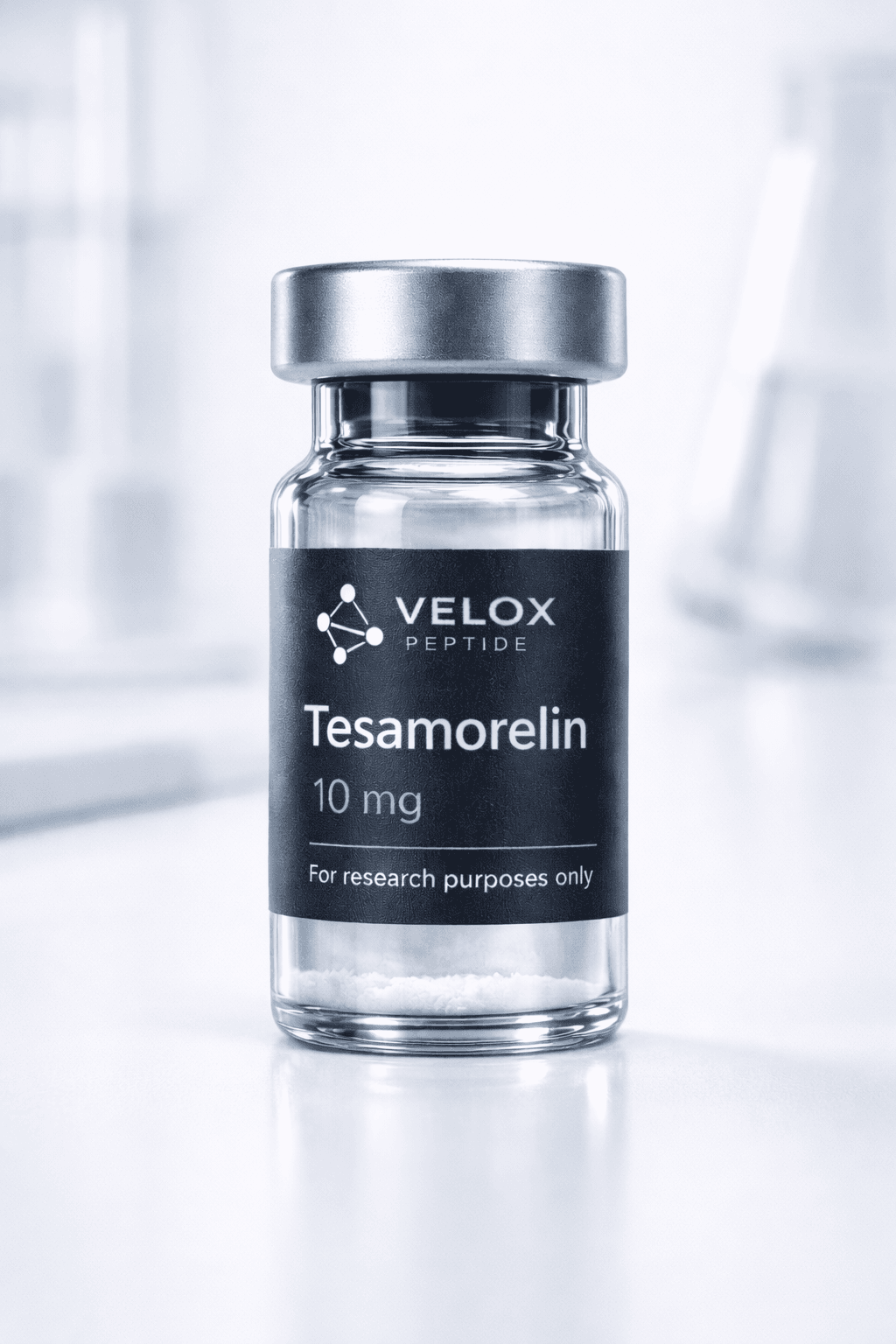
Composé de recherche · Usage scientifique uniquement
Tesamorelin — GHRH Analogue for Metabolic Research
44-amino acid GHRH analogue · lyophilised · ≥99% HPLC purity
Research use only. Retatrutide is an investigational compound not approved for human therapeutic use. All VeloxPeptide compounds are sold exclusively for in vitro and preclinical laboratory research with ≥99% HPLC purity certification.